Best property management software for small landlords in 2026
By UnitLync Team | Software comparison guide for independent landlords
If you only manage a handful of units, you do not need a giant enterprise platform. You need software that gets rent collected, maintenance tracked, documents organized, and tenant communication under control without forcing you into a long setup project.
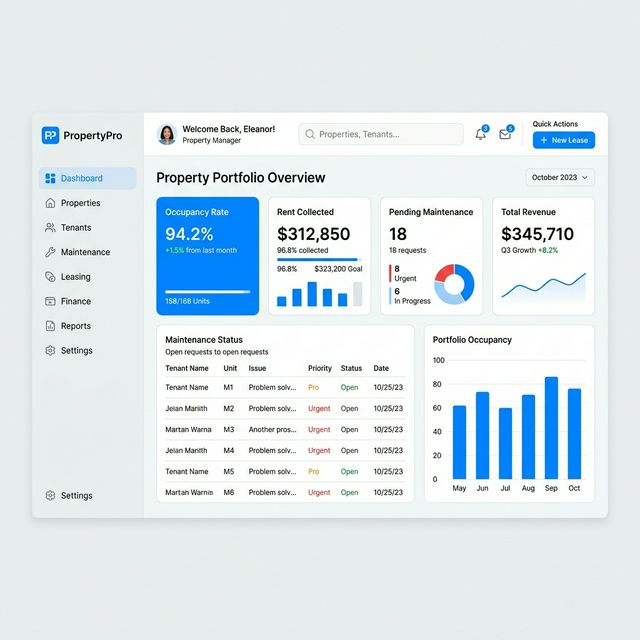
What small landlords actually need
The biggest mistake small landlords make is buying for features they will never use. A five-unit owner does not need a complex accounting suite if the real pain point is missed texts, scattered maintenance notes, and rent reminders that still live in a spreadsheet. Start with the operational basics and choose software that makes those basics easy.
- One place for tenant communication.
- A simple rent collection and payment history workflow.
- Maintenance requests with photos, status, and vendor handoff.
- Document storage for leases, inspections, and receipts.
- A setup process that does not require a consultant or a long onboarding call.
That is why this guide is paired with the more focused workflow posts on rent collection, maintenance management, and tenant communication. Those are the real building blocks.
How to compare tools without getting lost in the marketing
When you compare UnitLync with tools like TurboTenant, DoorLoop, TenantCloud, Innago, or similar platforms, do not start with the homepage claims. Start with your own daily workflow. Ask four simple questions: how quickly can you get started, how much friction exists for tenants, how well does it handle exceptions, and how easy is it to understand after the first week?
A small landlord software stack should be judged by how many things it removes from your list, not how many checkboxes it adds to a pricing page. If a platform gives you more reporting than you need but still leaves you chasing messages in a separate app, it is not solving the actual problem. If it saves two hours a week by centralizing communication and reminders, that is a meaningful win.
Comparison criteria that matter most
| Criterion | What to look for |
|---|---|
| Setup speed | Can you add a property, tenant, and payment flow in minutes instead of hours? |
| Communication | Can messages, reminders, and updates stay in one place? |
| Maintenance | Can a request become a trackable work item with photos and status? |
| Documents | Can you store leases and receipts without fighting the interface? |
| Pricing clarity | Is the plan structure easy to understand before you sign up? |
Where UnitLync fits
UnitLync is strongest for landlords who want a communication-first platform that still handles the core operations. It is built for owners who want to stop stitching together texts, spreadsheets, and email threads. If you care more about a clean daily workflow than a giant feature catalog, that is the right direction.
That usually means you are managing one to ten properties, you want tenants to have a clear portal, and you want the software to be understandable without a training manual. If that sounds like your business, the practical question is not "what has the most features?" It is "what helps me manage faster with less friction?"
If you are building the operational side of the business first, UnitLync pairs well with the rent, maintenance, and communication workflows in this blog. That is exactly why the other articles link back here. A software decision should support the whole operating model, not just one isolated feature.
When another tool may be better
Some landlords want deeper accounting, bigger teams, or complex reporting. In that case, a heavier platform might make sense. If you have a dedicated property manager, multiple staff users, or a large portfolio with advanced bookkeeping needs, you may value breadth over simplicity.
That does not mean a simpler product is weak. It means the best choice depends on the workflow you actually run. For an independent owner, simplicity often wins because it gets used more often. A perfect but confusing tool is still a bad operational tool. The right software is the one that gets adopted by you and by your tenants.
A quick shortlist by landlord type
Different landlords need different things. A first-time owner with one property usually wants setup speed, clear communication, and a simple monthly workflow. A landlord with a few rentals often wants better automation and a clean record of rent and maintenance. A landlord who is preparing to scale wants software that will not force a migration after the next purchase.
That is why the best software is rarely the one with the most marketing noise. It is the one that matches your stage. If you are trying to run a lean, communication-first operation, a lighter tool can be better than a platform that bundles in features you will never touch. If you need more accounting depth or team permissions, then the tradeoff may be worth it.
Questions to ask in every demo
- How long does it take to set up the first property and tenant?
- Can tenants find rent, maintenance, and document tools from mobile?
- What happens when a maintenance request needs a contractor handoff?
- How easy is it to keep messages, reminders, and records in one place?
- What part of the workflow is still manual after the setup is complete?
Those questions reveal whether a platform is actually solving your workload or just showing you a feature tour. If you cannot clearly picture the day-to-day workflow after the demo, the product is probably too complicated for what you need.
A simple decision rule
If you want the cleanest possible landlord workflow, choose the product that removes the most manual follow-up with the fewest steps. If you want more advanced accounting or larger-team support, choose the product that best matches that complexity. Do not buy complexity you do not need. Do not settle for a tool that feels easy at signup but creates friction every week after that.
For independent owners, the best property management software is usually the one you will actually use consistently. That is why the small-landlord decision is different from the enterprise decision. Simplicity is not a downgrade. In a small portfolio, simplicity is often the feature that protects your time.
Free plan or paid plan?
Small landlords often ask whether they should start with a free plan or pay for software from the beginning. The answer depends on your workflow. If your biggest need is to get organized quickly and understand the product without risk, a free plan can be a smart starting point. If you already know you need multiple properties, better automation, or a more polished tenant experience, a paid plan may save you time faster than a free one ever will.
The key is to avoid treating price as the only signal. A cheaper product that still leaves you chasing messages manually can end up costing more in time than a slightly more expensive one that removes real work. You are not just buying software. You are buying back attention.
Why review sites are useful, but not decisive
Review platforms are a good place to start because they show you what other landlords care about and where users tend to get stuck. But they should not be your final decision maker. Reviews often reflect a broad audience, while your decision is much narrower: what helps you run a small portfolio with less friction?
That is why this guide focuses on workflow fit. Compare the product to your actual needs, not to a generic star rating. If a platform looks great on review sites but creates extra steps for the exact tasks you perform every week, it is the wrong fit. The best match is the one that disappears into your routine and quietly makes the routine easier.
In practice, search terms and daily workflow should weigh more than generic feature checklists. If a product saves you time, keeps tenants informed, and does not create a second inbox for you to manage, it is probably the better fit for a small portfolio.
A simple 30-day buying process
- Write down your top five workflow pains.
- Score each platform against those pains, not against feature hype.
- Test the setup flow on a real property and a real tenant.
- Check whether the tenant experience is clear on mobile.
- Choose the tool that reduces the most manual work with the least confusion.
If you want more external comparison context, review the property management categories on G2, Capterra, and TrustRadius. Those directories are useful for broad market scanning, even if your final decision should still come down to workflow fit.
Related reading
Keep going with the workflow posts that shape a better landlord operating system.